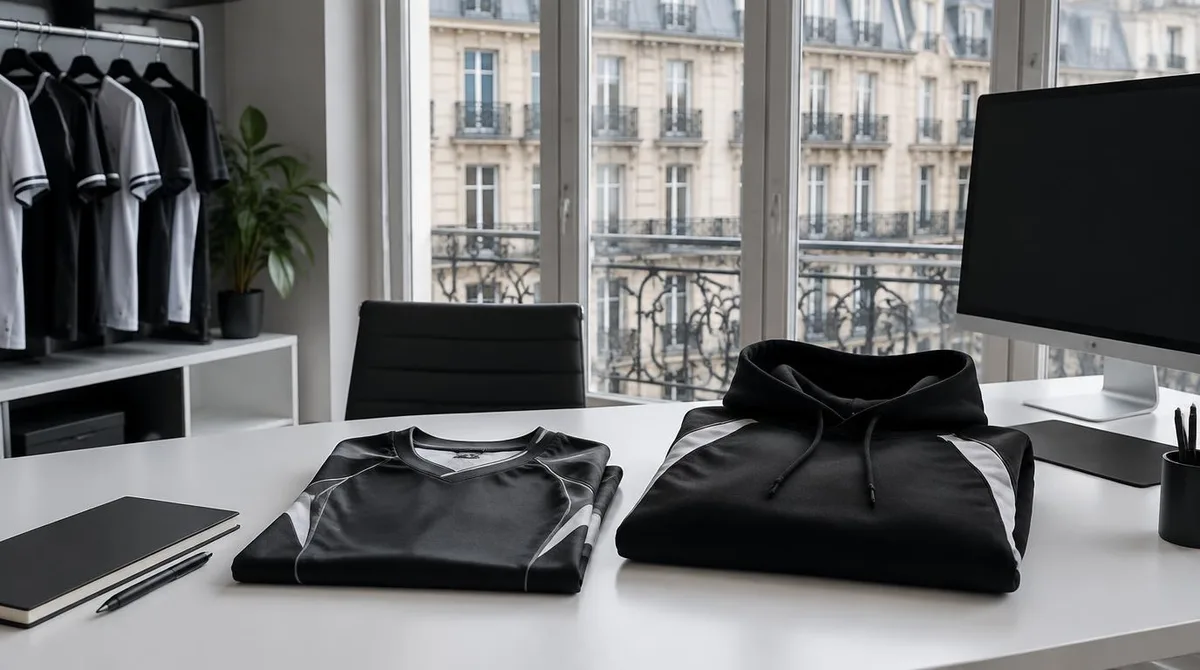
Esports merch has grown from plain team jerseys into full fashion collaborations with major names in clothing. Louis Vuitton put its monogram inside League of Legends in October 2019, and Ralph Lauren became the exclusive fashion outfitter to G2 Esports in July 2023, per both companies’ announcements.
The shift is about more than style points. Apparel gives teams income that does not depend on a league’s prize checks, and it gives fashion houses a route to an audience that watches matches instead of runway shows. The documented cases show how the two worlds found each other.
How did team jerseys set the template?
Early esports merch copied traditional sport: a jersey, a team logo, a roster name on the back. The formula worked as identity first and commerce second. What changed was ambition. Organizations started building apparel lines that could stand on their own, sold in drops that looked closer to streetwear than to stadium kit. This connects to our earlier piece, Cosplay at esports events became the arena's second sport.
100 Thieves shows the arc in one nameplate. The group’s reference entry describes it as an American lifestyle brand and gaming organization, founded in 2017 by Matthew “Nadeshot” Haag (Wikipedia). The company later spun off other business units to concentrate on esports and apparel, per the same record.
What did Louis Vuitton and Riot actually make?
The 2019 collaboration between Louis Vuitton and Riot Games put the house’s logo inside the game itself. According to the documented record, Louis Vuitton partnered with Riot in October 2019 to create digital assets for the True Damage skin line, with the LV logo visible on the champion Qiyana, along with a specialty trophy case for the 2019 World Championship (Wikipedia).
A trophy case sounds minor until the finals. The Summoner’s Cup is the prize every League of Legends team chases, and housing it in a designer case turned a game award into a fashion object. The skins did the opposite move, carrying the house’s codes into millions of match screens.
Why would a fashion house want esports?
Reach is the simple answer, and the G2 announcement makes the logic explicit. Ralph Lauren signed on as the exclusive fashion outfitter to the team, and the capsule, from t-shirts and polo shirts to tracksuits and caps, was set to be worn by athletes and creators during the LEC Summer Playoffs on July 15, 2023, per G2’s own announcement (G2 Esports).
Sabrina Ratih, then chief operating officer of G2 Esports, framed the deal as bringing fans closer to the brand and attracting new audiences, per the same statement. The collection, the announcement noted, let supporters wear items both inside and outside the arena. That sentence is the whole strategy in miniature.
What changes for the teams themselves?
Clothing lines change the balance sheet, not just the lookbook. Merch sells on team identity, and team identity survives losses, roster moves, and league restructures. A fan who buys a hoodie is buying the crest, and that purchase keeps paying even in a season without trophies. For related coverage, see Why esports orgs obsess over mascots and team identity.
The deals also change who courts whom. A house like Ralph Lauren treating a team as its exclusive outfitter signals that esports organizations can carry a famous label without embarrassing it. For teams, each documented collaboration raises the floor for the next negotiation.
Conclusion: from jersey racks to lookbooks
Esports merch started as a jersey and became a wardrobe. Louis Vuitton’s 2019 game assets proved a luxury house could live inside a game, and Ralph Lauren’s 2023 capsule proved one could dress a team on stage. The direction of travel runs one way.
The next cases will be judged by the same evidence standard: named houses, dated announcements, and products fans can actually buy. The jerseys built the audience. Fashion is now competing for it.