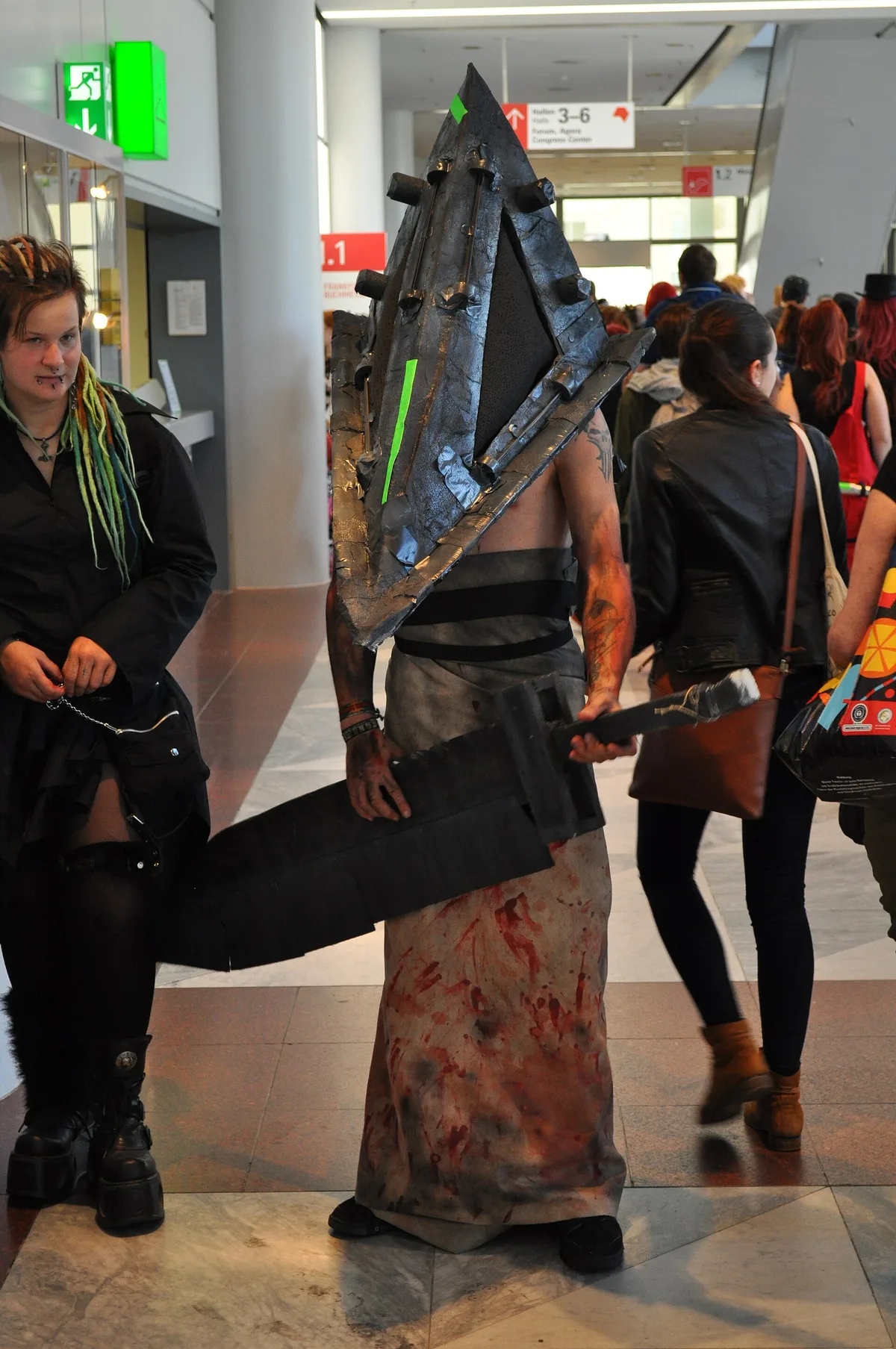
Esports cosplay is the arena's second competition, with its own ladder, stars, and unwritten judging criteria, running entirely parallel to the tournament on stage. A world finals crowd now expects a lobby full of hand-built armor and hand-sewn jackets representing the game's characters, and the best builders get photographed more than the substitutes. The craft is real: serious competitive costuming involves months of construction — foam work, sewing, LED wiring, wig styling — and the top builders at major convention contests, the training ground for arena cosplayers, have been winning with game character builds for over a decade.
Academia Hagi is an independent online publication covering gaming culture — not an event organizer or costume contest judge. This is about the people who make tournament weekends look the way they do.
Why did esports arenas adopt cosplay at all?
Because games come with characters, and characters come with fans who want to inhabit them. Traditional sport cosplay is a mascot joke; game cosplay is canonical, because the source material is already visual design. When competitive gaming moved into big physical venues in the 2010s, organizers inherited the convention model — a crowd in costume signals a healthy, creative fandom and photographs beautifully for event recaps. The presence was encouraged, then formalized: meetups, photo zones, and contest segments at majors. The lobby became a runway by accident and stayed one on purpose.
It also serves the broadcast. Cutaway shots of a crowd full of game-accurate costumes tell a home audience this scene has devotion, the same way painted football fans do — except the devotion here is measured in construction hours rather than away-days.
What does competitive-level cosplay actually involve?
More labor than most spectators assume. A championship-tier build typically breaks into distinct crafts, each with its own tools and learning curve:
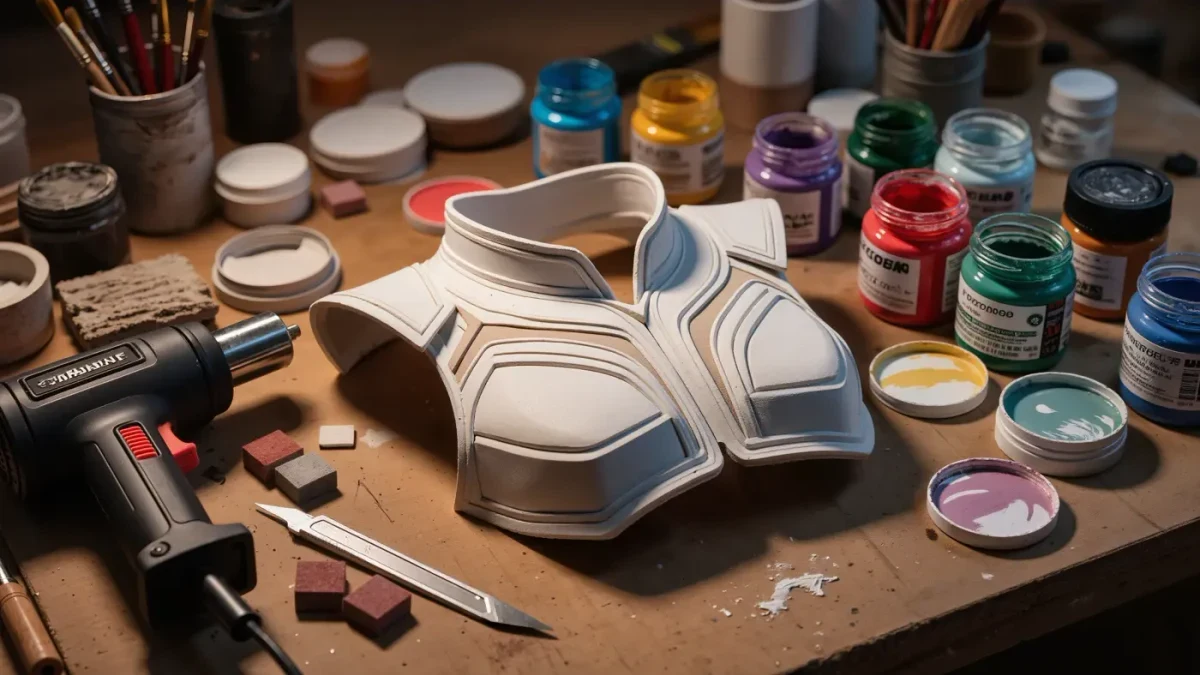
- Armor and props: EVA foam and thermoplastics shaped, heat-set, sanded, and painted to survive a day of shoulder-to-shoulder crowds.
- Sewing and tailoring: pattern-drafted garments fitted for movement, because a costume you cannot walk the venue in is a display piece, not cosplay.
- Electronics: LED arrays and battery systems wired for character glow effects, hidden to preserve the silhouette.
- Wig and makeup craft: styling and paint work that translates an animated character design onto a real human face.
Builders talk about the last 10 percent — the finishing pass that separates good from photographed — consuming as much time as the first 90.
How do builders and the scene support each other?
Through an economy that runs on visibility more than money. Esports cosplay is rarely salaried: builders trade photo credit, commission work, and sponsorships from costume-supply brands, while teams and publishers occasionally commission builds for booths and stage moments. The exposure economy is real and unevenly distributed — the same craft with a bigger following prices differently — but the community compensates with knowledge sharing: build tutorials, materials breakdowns, and pattern archives are posted freely, which is why the floor skill level keeps rising.
The relationship with publishers is mostly symbiotic. Game studios supply source designs precise enough to build from, and cosplayers return the favor as walking marketing that no media buy can buy. Some studios now send style guides and early design references to known builders around launches — an informal, quiet artist program.
The arena's best costume contest is unjudged: it is whoever the crowd decides to follow through the concourse.
How does esports cosplay differ from anime-convention cosplay?
The source material sets the constraints. Convention cosplay draws on animation, where physics is optional and fabric behaves like a suggestion; game cosplay answers to real-time 3D models, meaning every costume has been rendered from every angle, at rest and mid-action, and accuracy is checkable against the model viewer. The audience differs too: a convention hall rewards breadth of reference, while an arena crowd is concentrated fandom for one title, so a less-known character from the event's own game can out-draw a globally famous one from elsewhere. Esports events also run on tighter schedules — cosplay meetups are programmed around matches, not the other way around — which favors durable, mobile builds over fragile showpieces.
There is also a different relationship to in-game accuracy as a status marker. Because the crowd knows the game's characters frame by frame, close reading is the default mode: the stitching on a jacket that appears in one skin variant, the specific drape of a cape in an ultimate animation. Builders describe this audience as both more demanding and more appreciative — mistakes get noticed by thousands, and so does the craft. The arena floor functions as peer review with a photo pit, and passing it is the community's real trophy.
What are the frictions on the arena floor?
Three, mainly. Space: bulky builds meet tight seating, and venue rules on prop materials and size get stricter as arenas fill. Credit: photographers profit from images of builders whose handles go unmentioned, a running dispute the community polices through norms rather than law. And effort asymmetry: commissioned-store costume wearers and hand-builders share the same floor, and while most of the culture welcomes both — the scene's stated value is fun, not gatekeeping — the craft hierarchy is quietly understood at contest time, where construction judging separates the two explicitly.
There is also the visibility paradox. Arena cosplay decorates esports broadcasts without usually appearing in their business models — the builders are infrastructure, appreciated in shot and unmentioned in budgets. The communities that thrive are the ones where organizers at least name them: contest stages, builder features, designated photo hours.
Where is arena cosplay heading?
Toward professionalization at the top and accessibility underneath. Top builders increasingly operate as small studios — commission queues, equipment budgets, print-quality photography — while material innovation (affordable thermoplastics, better LEDs, 3D-printed details in home workshops) keeps lowering the entry bar for first-time builders. The result is a widening pyramid: more casual costumes at the base, more spectacular craft at the peak, and an arena floor that looks better every year the scene keeps growing. The tournament decides who wins the game; the concourse decides what it looked like. Both competitions are going long.