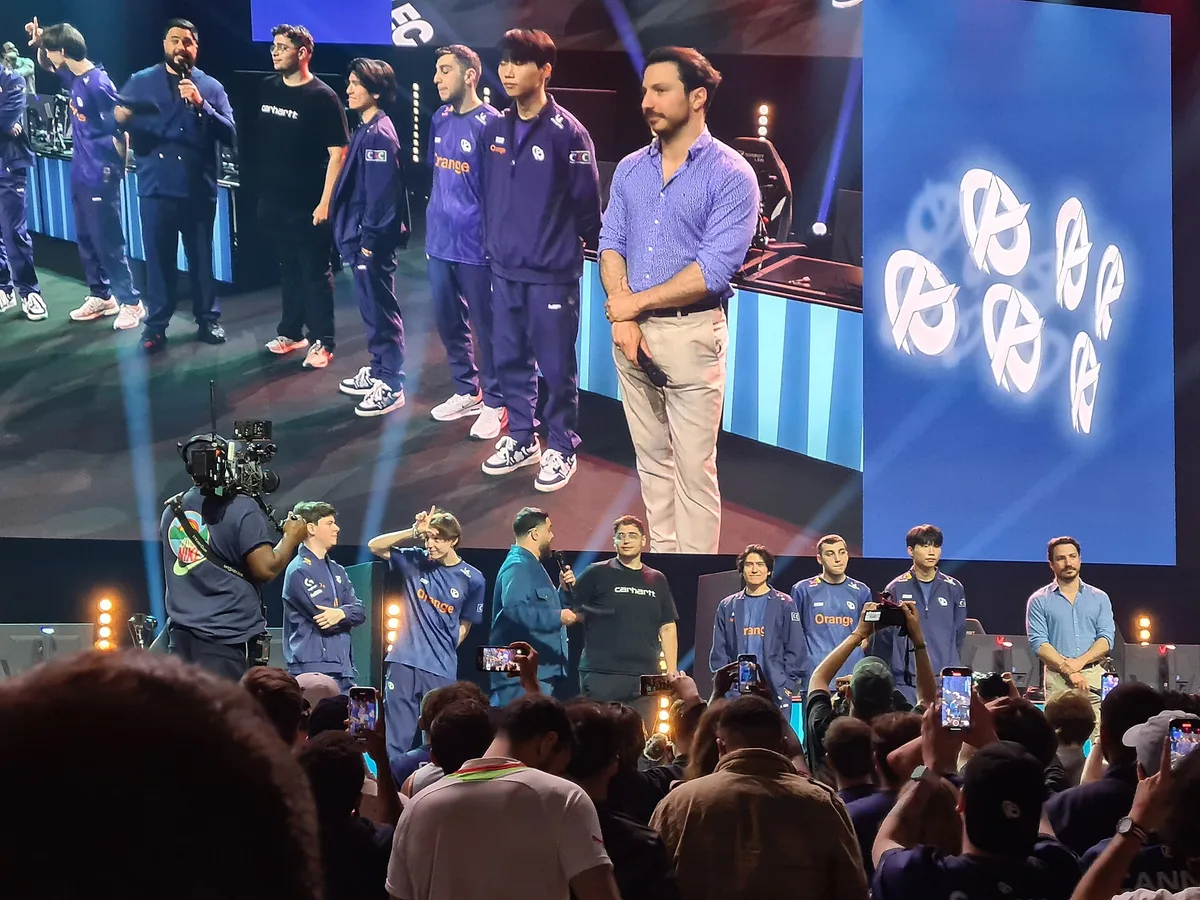
Nationality on an esports stage now marks a player's journey rather than a team's border. FaZe Clan became the first international roster in Counter-Strike history to win a Major at PGL Antwerp 2022, per the tournament's own record. Doinb, a South Korean, won the 2019 League of Legends World Championship after spending his entire career in China's LPL. The passport counts for less every season.
The shift is designed, not accidental. Different leagues answer the same question in different ways. Some circuits let any five players merge into one lineup. Others bind teams to a home region and let the players cross borders freely. Three of the biggest games show three working models. We covered a connected angle in Why older games stay competitive long after their sell-by date.
When did mixed rosters reach the very top
Counter-Strike never built a closed domestic league, so its open circuit always allowed lineups without a shared flag. Antwerp put the result on record. FaZe Clan, an international lineup, won the seventeenth CS:GO Major at the Sportpaleis in May 2022. The event held 24 teams and a $1,000,000 prize pool, and FaZe beat Natus Vincere in the grand final, per the tournament's recorded summary.
The trophy mattered less than the precedent. A roster assembled across borders had taken the discipline's most recognized title, and the scene absorbed it without treating the result as an exception. Any lineup that qualified could win, whatever combination of countries it happened to hold.
How do leagues treat borders differently
League of Legends runs the opposite model. Regional leagues bind teams to a home territory, yet players cross those borders constantly. Doinb is the clean case. He is a South Korean mid laner who spent his entire professional career in China's LPL. He won the league's most valuable player award in 2017 and again in 2019, then swept G2 Esports to take the 2019 World Championship, per his recorded career.
Valorant adds a third arrangement. Riot Games split the 2023 season into three international regions: Americas, EMEA, and Pacific. Thirty teams entered a partnership format running from 2023 through 2027, per the tour's own announcement history. The league gives a team its address, while the roster itself stays open to any passports the organization signs.
Does the home region still matter
It matters more than ever, just not as a nationality test. Each international Valorant league works as the domestic competition that qualifies teams toward Masters and Champions. A European fan can still cheer an EMEA slot through an entire season. The region is the league a team belongs to, and the standings make that belonging concrete every week. For related coverage, see Why esports orgs obsess over mascots and team identity.
League of Legends works the same way at the league level. The LPL plays in China, the LCK in Korea. The drama comes from imported careers fighting for standing inside a home that is not theirs by birth. The border creates the story even as the roster ignores it.
What replaces nationality as the fan's anchor
The organization's badge and the league's territory do the work the flag used to. A fan follows an org across its rosters, or follows a regional league as a home competition. Nobody on stage has to share the local flag. Identity moved up a level, from player to institution.
Careers build the other kind of anchor. A player who spends years in a foreign league accumulates that league's fans. Doinb's run in China made him an LPL figure long before any World Championship final. The audience follows the resume now, not the birthplace.
Conclusion: the badge moved and the passport stayed home
International rosters turned nationality into backstory. Counter-Strike proved an open market can crown a mixed lineup at its own Major. League of Legends proves a foreign career can end with a world title. Valorant proves a team can be rooted in a region without being restricted by one. The stage belongs to whoever qualifies, whatever the passports say.