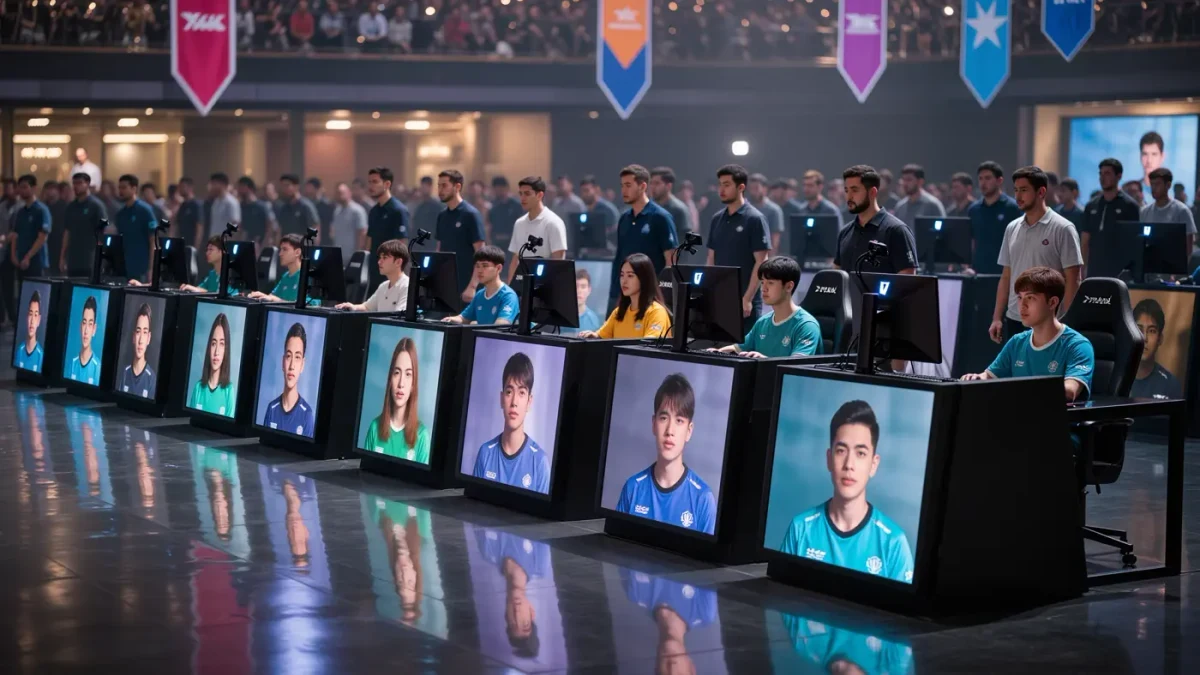
A great esports season finale does four things at once: it convenes the season's legitimately best teams (through points, seeds or qualifiers rather than invitations alone), it stages them in a format with real stakes (single elimination or double elimination, long series, no filler), it lands on a calendar date the whole scene orbits for weeks, and it pays enough to matter without the prize becoming the only story. By that measure, League of Legends' Worlds — which crowned T1 in London on November 2, 2024, per the BBC's final coverage — remains the benchmark, while the Esports World Cup's record $70-million-plus 2025 pool, per Reuters, shows scale alone does not make a finale. Academia Hagi is an independent online publication comparing season-ending designs, not a broadcaster of them.
The question matters more every year because finales have multiplied. Each major title now ends its season with a flagship, off-season mega-events crowd the summer, and fans ration attention. Design quality — not prize size — is what separates the finales people clear their calendars for from the ones playing to a clip audience.
What separates a finale from just a big tournament?
Consequence accumulated over time. A standalone event, however large, starts its story when it begins; a season finale is the last chapter of a season-long argument — who banked points, who survived qualifiers, who peaked at the right time. That is why qualification design is finale design: a final whose field arrived through a season of legitimate gates carries narratives a fully invited field cannot, no matter the prize pool.
The second separator is format seriousness. The best finales resist gimmicks at the business end: long series, no second chances or carefully justified second chances, and a bracket the audience can hold in its head. Novelty belongs in the group stages; the final weekend belongs to stakes.
How do the major finales compare on the essentials?
| Finale | Field decided by | Endgame format | Signature strength |
|---|---|---|---|
| LoL Worlds | League seeds, points, play-ins | Single-elimination knockout | Season-long narrative payoff |
| VCT Champions | Circuit points, last chance | Double elimination | Fairness to the year's best |
| CS Major | Open qualifiers, rankings | Single-elimination playoff | Openness, bracket purity |
| Esports World Cup | Invitations across titles | Varies by game | Scale, multi-game club stakes |
Notice the pattern in the first three rows: each chose a different answer to «who deserves the last seat and the last second chance», and each answer produces a differently flavored champion. The fourth row is the outlier — a finale for organizations across games rather than for a title's season, which is precisely why it works as an event and less as a chapter.
Does a bigger prize pool make a better finale?
It makes a bigger graphic, and past a threshold almost nothing else. The evidence is the recent history itself: The International's $40-million peak in 2021, per Valve's published figures, did not out-last Worlds' modest guaranteed pool as the scene's emotional center, and the pool's subsequent shrinkage was public and awkward. The Esports World Cup proved state-backed money can buy record scale — more than $70 million in 2025, including $27 million for the club championship, per Reuters — and organizers noticed. But the finales fans describe in the language of legend are the ones where the qualification path loaded the bracket: a team's second consecutive title, a region's first, a sixteen-year-old's debut run.
Money attracts participants; consequence attracts memory. The best-funded events understand this and spend on staging, venues and qualification infrastructure rather than on inflating the pool number alone.
What format choices define the final weekend?
Three decisions do most of the work:
- Elimination doctrine: single elimination for maximum stakes (Worlds knockout, Major playoffs) versus double elimination for maximum fairness (VCT Champions playoffs). Neither is objectively right; a finale should simply know which virtue it is buying.
- Series length: best-of-five at the business end, giving teams room to adapt across a series rather than lose to one bad map. The best finales escalate series length as the bracket narrows.
- Rest and preparation: days between playoff rounds, because a finale decided by fatigue is a finale that wastes its own stakes.
The weakest finales compromise the first decision — hybrid gimmicks, unearned advantages, format changes mid-bracket — and audiences smell the insecurity immediately.
Why do some great seasons end with flat finales?
Usually a field problem disguised as a format problem. When qualification math locks the field weeks early, the finale becomes a coronation — drama requires the possibility of surprise. When a circuit's points system lets a fading team coast in, the finale starts with an asterisk. And when the host venue cannot hold the crowd the scene brings, the peak moment lands in a room that undersells it — a logistics failure that reads, on every broadcast, as the organizer not believing in its own event.
The fix is upstream: qualification systems that keep seats undecided until late, formats that guarantee the best teams meet under maximum stakes, and venues booked to the size of the story. The finale is the harvest; the season is the farming.
What should the ideal finale look like?
Our checklist, as a publication that has spent a lot of time watching these things end well and badly: a field earned through a season, not an invitation list; a knockout that escalates from best-of-ones to best-of-fives; a champion crowned on a date the whole scene circled months earlier; a prize pool that respects the players without drowning the sport; and one moment — a fifth game, a lower-bracket run, a rookie's arrival — that people still describe years later without being asked. Get those five right and the finale writes itself into the scene's memory. Get four right and fans will argue about the missing one forever, which, honestly, is also a sign of a great finale.