Esports prize pools come from three places: publisher guarantees (the game's owner simply funds the pool as a marketing budget — League of Legends' Worlds ran on a guaranteed $2,225,000 in 2024, per the organizer's published figures), crowd funding (fans buy in-game items and a slice of sales feeds the pool — the model that pushed Dota 2's The International over $40 million in 2021), and third-party or state-backed funding (outside money, most visibly Saudi Arabia's Esports World Cup, which offered a record pool above $70 million in 2025, per Reuters). Understanding which model is paying explains almost everything about a tournament's scale, stability and stakes. Academia Hagi is an independent online publication covering the business of competitive gaming, not a betting or financial outlet.
How does the publisher-guarantee model work?
The publisher treats the prize pool as an advertising line item. Riot Games funds Worlds and VCT Champions from its own budget; Valve guarantees a base Major pool; Capcom funds its Capcom Cup circuit the same way. The numbers look modest next to Dota's crowdfunding peaks — a couple of million against forty — but the model's virtue is reliability: the pool exists because the marketing plan says it exists, every year, regardless of whether fans buy anything.
The strategic logic is that a stable, professional-looking circuit is worth more to a publisher than a giant one-off number. Salaries, franchising agreements and venue deals do the retention work a prize pool spike cannot. That is why Riot's pools have stayed flat while its ecosystem spending grew.
What happened to crowd funding?
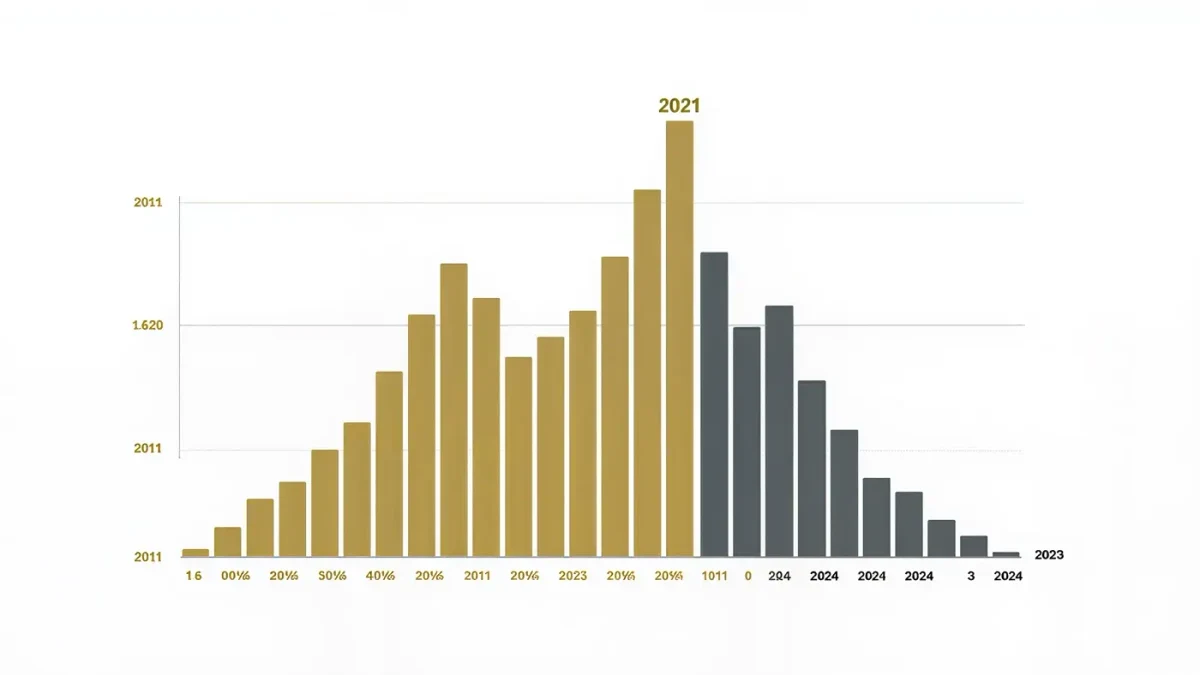
Dota 2 happened to it, twice — once as an explosion, once as a cautionary tale. The International's Compendium-era model, where roughly a quarter of Battle Pass sales fed the pool, produced the most famous numbers in esports history: The International 2021 peaked above $40 million, per the organizer's published figures, an order of magnitude above every rival. It also taught the industry three costs:
- Concentration: one event hoards the scene's money, and every other tournament looks like a warm-up.
- Dependency: when Battle Pass sales soften, the flagship pool shrinks publicly — The International's pool fell dramatically in 2023 and 2024 from its 2021 peak, per Valve's own figures, and no publisher enjoys announcing a smaller number than last year.
- Incentive distortion: a crowdfunding event pressures cosmetic production over competitive health, because the pool depends on the shop, not the sport.
Publishers watched that arc and mostly declined to copy it at scale. Crowd funding survives in smaller, steadier forms — item bundles tied to events, team-branded cosmetics with revenue shares — rather than as the engine of a flagship pool.
What is third-party and state-backed funding doing to the numbers?
Raising the ceiling and complicating the questions. The Esports World Cup in Riyadh offered a record prize pool of more than $70 million in 2025, including $27 million for its cross-game club championship, per Reuters' report from April 2025 — a scale no publisher model or crowdfunding campaign approaches, and a figure its organizer has continued to raise since the event's 2024 debut. Team Falcons repeated as the event's club champion in August 2025, per Reuters, in a structure that pays organizations across dozens of games rather than crowning one title's winner.
For orgs, this is the most significant new money in a decade — a counterweight to the post-franchising austerity years when several storied organizations shut down or shrank. The open question, which we track honestly rather than resolve, is what long-term dependence on state-funded mega-events does to the publisher-run circuits that built the sports.
How do the three models compare?
| Model | Flagship example | Typical top pool | Strength | Weakness |
|---|---|---|---|---|
| Publisher guarantee | LoL Worlds, VCT Champions | ~$1-3 million | Stable, annual, ecosystem-first | Modest headline numbers |
| Crowd funding | The International (peak era) | $40 million at peak, far lower after | Massive fan engagement | Concentration, dependency, volatility |
| Third-party / state-backed | Esports World Cup | $70 million+ (2025) | Record scale, club-level support | Dependence on outside priorities |
Why do players still earn less than the pools suggest?
Because a prize pool is revenue, not salaries, and it splits many ways. A $2 million pool divides across a field of dozens of players plus organizational cuts; a $70 million club championship pays across whole rosters, staff and games, per the EWC's published structure. The dominant income story of the past decade was never pools anyway — it was salaries and franchising revenue shares, which is precisely why publishers kept pools modest while spending on infrastructure.
The fan-facing distortion is that pool size reads as scene health. It is not: the healthiest competitive ecosystems of recent years ran on some of the smallest flagship pools, while the biggest single pool in esports history belonged to a model its own publisher later scaled back. Judge a circuit by whether it pays everyone, every year — not by one number on a trophy graphic.
Where is prize money heading next?
Two visible directions as of mid-2026. First, consolidation around the publisher-guarantee baseline: predictable pools, more of the money moved into salaries, revenue shares and stipends, because operators learned volatility is worse for rosters than modesty. Second, the state-backed mega-event tier continuing to escalate — the Esports World Cup's organizers announced further growth beyond their 2025 record — pulling organizations toward multi-game club models. The crowdfunding era, for now, looks like a peak that the industry climbed once and decided not to climb again.