It has, and the argument is quantifiable: Street Fighter 6 enters its third full competitive year in 2026 as the center of the fighting game community's largest-ever era — Evo's SF6 bracket set franchise entry records in 2023 and stayed at the top of the genre's numbers through 2025, Capcom's official circuit (Capcom Cup, with a million-dollar-scale grand prize at its peak as of the mid-2020s seasons) kept a global professional ladder running, and the player spread — Japan, the Caribbean, Latin America, Europe, the Middle East, Southeast Asia — is the widest the series has ever competed across. The review below explains why the ecosystem works. Our standing clarification: Academia Hagi is an online publication, not a broadcaster or tournament operator.
Why does SF6's competitive design work so well?
Because it solved the genre's oldest trade-off. Modern fighting games live or die on whether newcomers can execute while masters can express, and SF6's drive system — a shared resource meter spent on reversals, parries, and enhanced moves — plus its control-scheme options gave both populations a reason to stay. The competitive meta rewards neutral play, resource accounting, and corner pressure in proportions that make matches legible to viewers: when a drive gauge empties, everyone in the arena understands what it means. Capcom's seasonal balance patches have been conservative by fighting-game standards, letting counter-play develop instead of resetting the meta every quarter. A spectator sport needs stability; SF6's patch philosophy respects that.
What does the professional circuit look like?
Two interlocking systems. Capcom's own tour runs online qualifiers by region into offline premier events, climbing toward Capcom Cup — the discipline's de facto world championship, whose winner's prize reached the million-dollar scale in recent seasons per Capcom's official prize breakdowns. Alongside it sits the community tier: Evo and its regional siblings, major tournaments run by long-standing organizers, and a pro-card system feeding invitational status. The two tiers don't compete; a rising player uses community majors to build a name and Capcom's ladder to build a living. That dual structure — open community events plus a publisher-funded professional spine — is the model other genres spent the 2020s unsuccessfully trying to franchise.
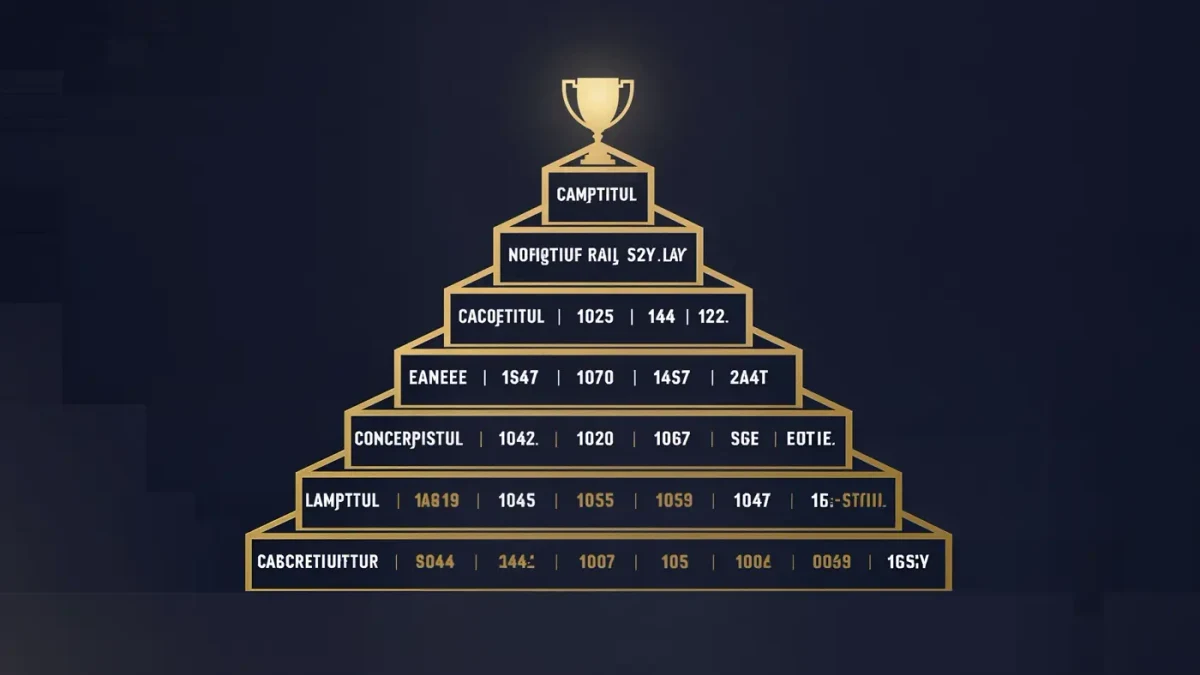
| Circuit layer | What it is | Why it matters |
|---|---|---|
| Capcom Cup cycle | Publisher world championship with seven-figure top prize | Makes a full-time pro career possible |
| Capcom regional qualifiers | Online entry points by region | Global ladder, genuinely open |
| Evo and community majors | Open-entry tournament festivals | Talent discovery, culture, scale |
| League invitational events | Season team leagues | Steady income for top players |
Who defines the SF6 era?
A genuinely international cast, which is the era's defining feature. Japanese players set the technical standard, as they have in every Street Fighter generation since the 1990s; Caribbean and Latin American players — with the Dominican Republic's scene producing one of the game's defining champions in its first Capcom Cup cycle — broke the old assumption that elite play concentrated in three countries; Europe, South Korea, and the Middle East all housed contenders capable of winning premier events as of the 2025 season, per Capcom's official results. The geographic spread matters beyond sentiment: it gives organizers local heroes on every continent, which is what fills venues — a truth the genre saw confirmed when fighting titles sat inside the medal program at the 2023 Asian Games in Hangzhou, alongside the Asian Games gold that legitimized esports on sport's biggest continental stage, as Reuters reported at the games.
Where does the ecosystem strain?
Depth of purse, not depth of talent. Fighting game esports pays its champion magnificently and its rank-and-file modestly — outside the Capcom Cup ladder and a handful of invitationals, most professional SF6 players still travel on their own dime and monetize through streaming and content, an economics gap the genre has never closed. The scene's second structural question is game-cycle dependency: fighting game competitive health is tied to a single title's commercial life, and the transition years between installments historically thin out every scene. SF6's player counts and Capcom's sustained competitive investment through 2025 push that question past this review's horizon, but it's the honest caveat on any golden-era talk.
How important is Japan to the ecosystem?
Foundational, in a way that goes deeper than results. Japan supplies the scene's strongest pro league structure, its densest arcade-rooted development culture, and a domestic sponsor market — automotive, beverage, telecommunications brands — that funds full-time salaries for players who in most regions would be streaming for rent. The Capcom Cup champions of the SF6 era's first cycles came from outside Japan, and that is precisely the point of a healthy structure: a rising Caribbean or European star beating Japanese players is a story only because the Japanese base is the measuring stick. Take the base away and the whole ladder's units of measurement blur.
The ecosystem's quiet strength is that Japan's dominance is structural rather than atmospheric. The strongest Japanese players earn living wages from league salaries and long-term sponsorships, not from Twitch; their practice environments — team houses, corporate affiliations, scheduled league seasons — look like traditional sports infrastructure. Western scenes, which monetize personalities first and competition second, produce stars at a comparable rate and careers at a materially lower survival rate. The genre's global spread in the SF6 era is genuine and welcome. Its economic model still runs through Tokyo, and any honest review has to say so.
Verdict?
The numbers say biggest ever, the design says built to last, and the spread says global in fact rather than in marketing. What elevates this era beyond raw scale is legibility: a neutral game viewers can read, a patch cadence that respects mastery, and a championship whose stakes — life-changing money, won head-to-head, no teammates to share it with — are the purest in competitive gaming. Street Fighter 6's first three competitive seasons belong on the short list of great eras in fighting games. The only argument left is where it ranks, and that argument is part of the fun.
Fighting games were told for two decades that they were too niche, too hard to watch, too Japanese, too American, too everything. SF6's era answered by setting entry records and crowning champions from regions the old map didn't bother labeling.