Yes — and the gap between how Siege esports is discussed and how it actually runs is the widest in major esports. Ubisoft's tactical shooter entered 2026 with a rebranded, modernized client (Siege X, launched June 2025), a stabilized professional circuit under BLAST's operation, a Six Invitational that reliably fills a NHL-scale arena in February, and a regional base — Brazil above all — that keeps producing contenders. The scene is not large. It is, however, structurally sound in ways flashier circuits stopped being. This review explains the difference — with the standing clarification that Academia Hagi is an online publication covering the ecosystem, not a broadcaster.
What did Siege X change for the competitive scene?
Siege X, the June 2025 relaunch that bundled a visual overhaul, audio rework, and modernized client systems under one name, functioned as a free second launch for a ten-year-old game. For the esports ecosystem, the effects were indirect but real: a refreshed client made the game easier to recommend to new viewers, the renewed development energy signaled publisher commitment after years in which the competitive scene wondered whether it had been quietly deprioritized, and player counts held at healthy post-relaunch levels as of late 2025 per Ubisoft's own communications. A competitive circuit is downstream of a living game; Siege X made the game more obviously alive.
How does the professional circuit actually work?
Under the structure operated by BLAST since the 2024 season, the top tier runs as a global league with regional stages feeding international majors — a calendar built around the Six Invitational in February, mid-year Majors, and a season finale. The format emphasis on best-of-threes, double elimination at the business end, and long preparation cycles suits Siege's coach-heavy, set-piece identity: this is a game where executes are drawn up like American football plays, and the circuit gives teams time to draw them up. The competitive product rewards study; its broadcasters have learned to teach while they call.
| Circuit element | What it is | State as of 2025 |
|---|---|---|
| Six Invitational | February world championship | Sells out; the circuit's tentpole |
| Mid-year Majors | International events between splits | Stable under BLAST |
| Regional stages | League play by region | Active, Brazil especially strong |
| Game client | Siege X relaunch | Launched June 2025 |
Which regions and teams define the era?
Brazil is the heartbeat, and has been since the mid-2010s: the region's fan intensity travels, its organizations iterate relentlessly, and its rivalry with North American and European programs gives the circuit its emotional spine. The mid-2020s competitive order stayed genuinely multi-regional — Brazilian, European, and North American organizations all held trophies in recent international windows as of the 2025 season, per BLAST's official results — which is rarer than it sounds in an era where most circuits ossified into one-region dominance. Tension point: roster economics. Siege salaries never reached the speculative heights of bigger titles, and the scene's best players are prized precisely because they are underpaid by the market's standards.
What is still wrong with the ecosystem?
Three things, honestly. First, discoverability: Siege's tactical depth makes it a hard cold sell to casual viewers, and its highlights are less shareable than a fighting-game clip or a ninety-mph Rocket League goal. Second, the middle: as with most 2020s circuits, tier-two Siege is under-monetized, and regions outside the established base struggle for calendar space. Third, publisher history: Ubisoft spent years earning skepticism about esports commitment before the recent stability, and a decade of that skepticism leaves a residue no single good season cleans off — the wider industry's boom-and-correction cycle, covered across Reuters' technology section, made publishers everywhere cautious. The circuit's job now is boring continuity: keep the calendar legible, keep the Invitational big, keep the client modern.
Is the Six Invitational still a top-tier event?
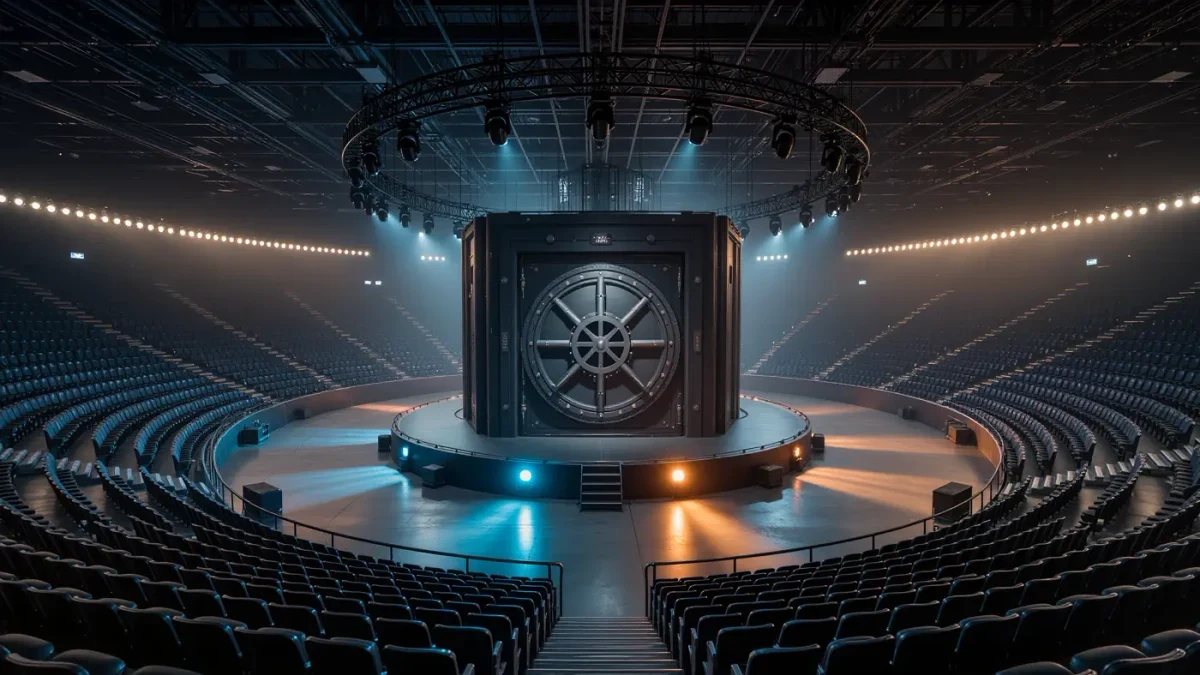
By the only test that matters — do people clear their calendars for it — yes, and the review should be specific about why. The Invitational lands in February, in a cold-weather city, in an arena scaled for major-league sport, and it sells out with a crowd composition that would surprise anyone who still pictures Siege as a niche tactical title: family groups, traveling Brazilian fan blocks, entire sections in regional kit. As of the 2025 edition, per BLAST's event materials, the crowd and broadcast scale sat comfortably within the circuit's historical range. More telling is the format: the Invitational runs long, with a double-elimination structure that rewards preparation over single-map luck, and it bookends a season rather than replacing one — the February slot gives the circuit an annual reset point that most esports calendars lack.
The event also does the quiet work of legitimizing the whole scene's February-to-February rhythm. Sponsors buy annual programs around it. Organizations set roster deadlines against it. Regions schedule their qualifiers so their best teams peak for it. A tentpole that everything else orients toward is the definition of a healthy circuit's spine, and Siege has built one that a decade of publisher wobble never quite managed to knock over. That sturdiness, more than any single audience number, is why this review reads the scene as underrated.
Verdict: underrated on purpose or by accident?
By accident, mostly. Siege esports suffers from a discourse-shape problem — it is neither big enough to headline nor troubled enough to be a cautionary tale, so it simply isn't discussed — rather than a structural one. The structure, as of the 2025-2026 season: a committed operator, a publisher that re-invested visibly with Siege X, a tentpole event that anchors the calendar, multi-regional competition, and a game whose competitive identity has been coherent for a decade. What it lacks is scale, and scale was never a promise this circuit made. Judged against its own size, Siege esports is one of the best-run scenes in the industry. Judged against the games with ten times its audience, it is a model worth copying.
Siege's competitive scene spent years being told it was dying by people who stopped watching. It responded by fixing its client, stabilizing its circuit, and selling out its world championship every February.