The 2026 Mid-Season Invitational will run June 28 through July 12 at the Daejeon Convention Center in Daejeon, South Korea, per Riot Games' announcements — the city confirmed on November 7, 2025 during Worlds media day in Chengdu, and the venue confirmed on March 22, 2026 during the First Stand finals in São Paulo. It carries a $2,000,000 base prize pool and, for the first time since 2024, separate LCS and CBLOL representation.
Academia Hagi is an independent online publication covering competitive gaming — not a broadcaster, streamer, or event organizer, and not affiliated with Riot Games.
How do teams qualify for MSI 2026?
Per Riot's published qualification structure, the LCK, LPL, LEC, LCS and LCP each send two teams — their top two from the spring split — while the CBLOL sends one. That is the direct consequence of the September 28, 2025 decision to discontinue the Pan-American LTA: the Americas went from one merged qualifier to two regional ones, restoring the pre-2025 map at MSI for the first time since the merger.
What is the format?
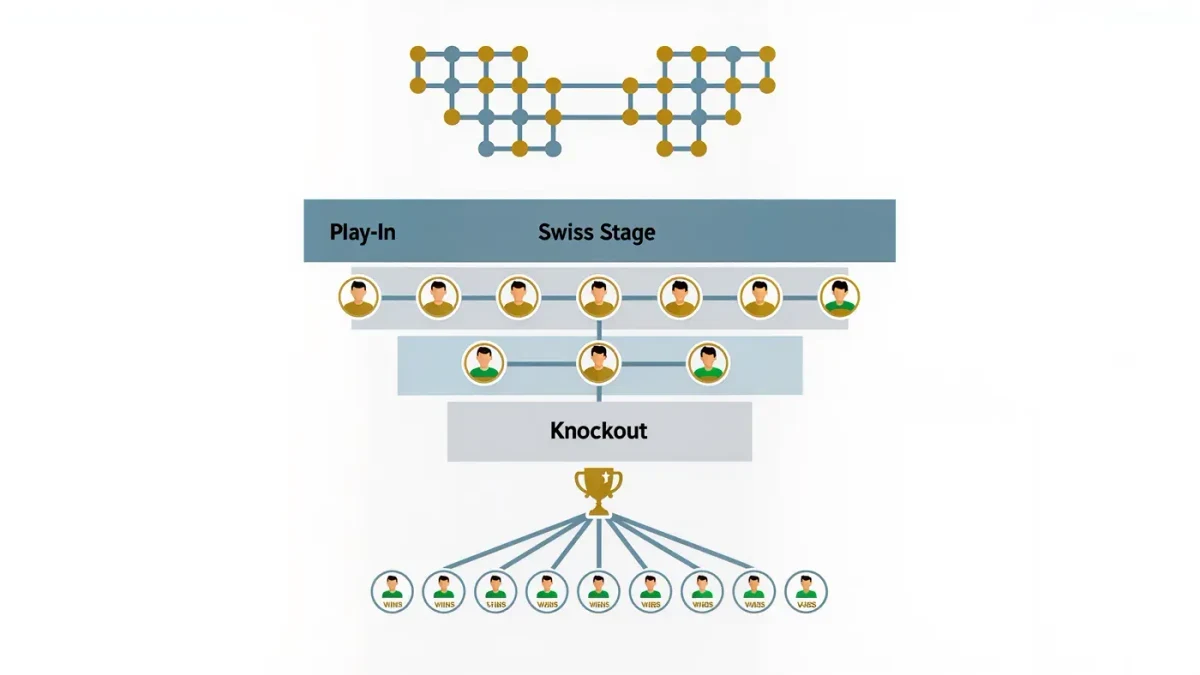
Per the published rules, the tournament runs two stages:
- Play-in, June 28 to July 1: four teams — the second seeds of the LCK, LCP, LCS and LEC — in a GSL-style double-elimination bracket where every match is best-of-five; only the winner advances.
- Bracket stage: eight teams in a double-elimination, best-of-five bracket. The LPL's two seeds skip the play-in entirely, because the region won the 2026 First Stand tournament in São Paulo this March.
The stakes reach past the trophy: per the rules, the MSI winner qualifies automatically for the 2026 World Championship provided it reaches its region's third-split playoffs, and the runner-up's region earns an additional Worlds slot.
Why does the LPL's First Stand win matter here?
Because it converts a March result into a June advantage. Winning First Stand in São Paulo moved both LPL seeds directly into the MSI bracket stage, per the published rules — one fewer gauntlet for the region, and one extra elimination threat for everyone else drawn against a rested, seeded Chinese side. It also continues a stretch of LPL international strength that shapes how the Daejeon bracket gets built: regions that win early-season events keep compounding structural advantages through the year, a quiet design choice of Riot's calendar that fans argue about every season.
Is Daejeon a proven esports host?
Yes, by local standards. The Daejeon Convention Center previously hosted the 2023 LCK Summer Finals weekend, per the venue's esports history — a mid-size hall rather than an arena, which fits MSI's recent preference for intimate, loud rooms over cavernous ones. Korea last hosted a full international League of Legends event cycle years ago, and per Riot's January 8, 2025 development update, the country was chosen as host well ahead of the city announcement — giving organizers a long runway for a two-week, two-stage event.
What should fans watch before June?
The regional playoffs. Every MSI seed is decided domestically in spring: the LCK and LPL races decide who avoids the play-in meat-grinder, the LEC sorts its two representatives, and the newly re-split LCS and CBLOL each get their first independent path back to an international stage since 2024. By the time the bracket stage opens in July, half the field's fate will have been decided by a single play-in weekend in June — four second seeds, one survivor.