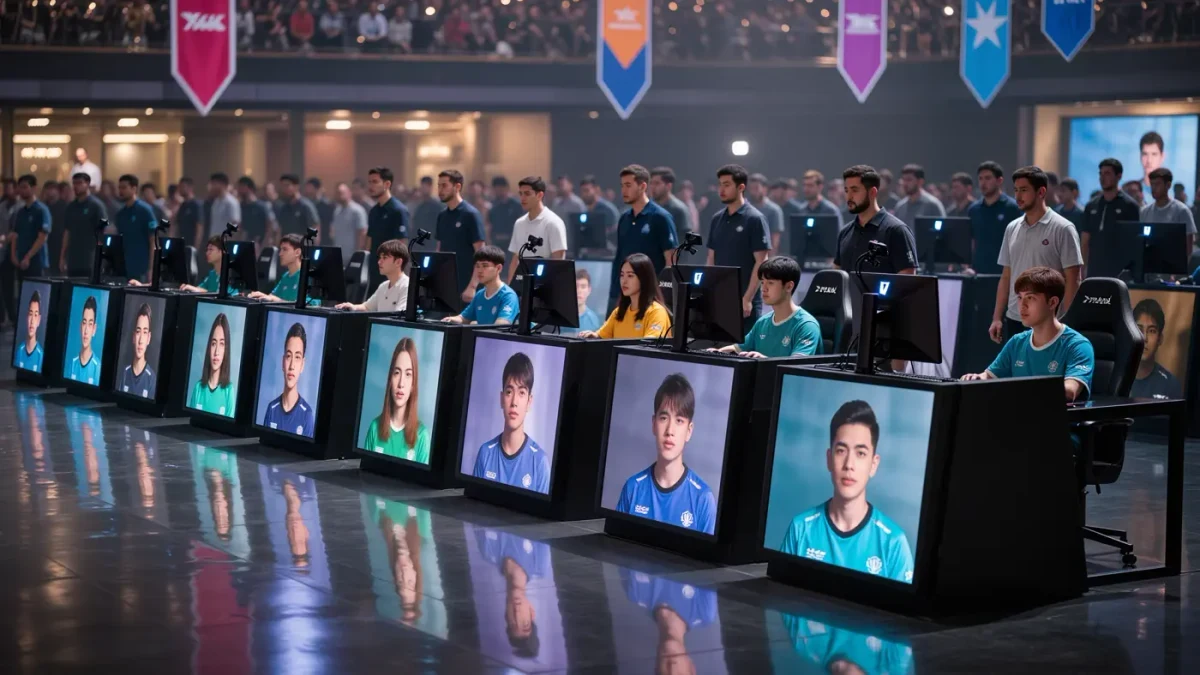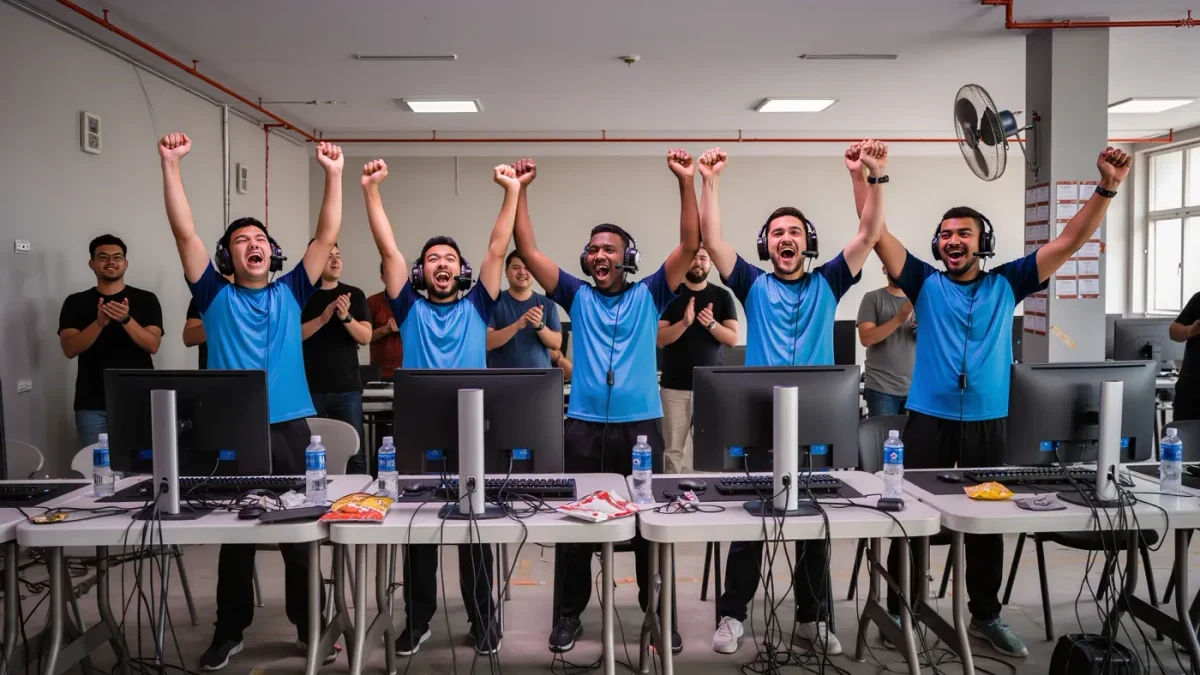
Regional qualifiers are the ladder that moves a team from its home region to an international stage: open qualifiers (any registered roster can enter), closed qualifiers (a limited field of established teams, invited or seeded through earlier rounds) and regional finals or ranking systems (the last gate that converts regional results into world-championship seats). The exact machinery differs by title — CS2 routes qualification through its regional ranking and qualifier events, League of Legends through league placement and last-chance regional finals, VALORANT through its regional leagues and promotion/relegation edges — but the shared idea is that a world event should be a world event without handing every seat to the richest regions. Academia Hagi is an independent online publication covering how these systems work, not an organizer.
The stakes are the whole sport in miniature. One qualifier series can be the difference between a roster's entire year mattering and not existing; the open bracket is where unsigned teenagers knock out salaried veterans. Understanding a qualifier's shape tells you whether a region's scene is open or closed before you look at a single scoreboard.
How does the qualifier ladder actually run?
The canonical version, with minor variations across titles, has four rungs:
- Open qualifiers: single- or double-elimination brackets open to any roster that registers. Huge fields, best-of-one formats early on, brutal variance — the widest door in esports.
- Closed qualifiers: the open survivors meet invited teams — typically those with strong regional standings — in a GSL-group or double-elimination bracket with longer series.
- Regional final: the last stage before the world event, where regional seats are actually awarded; in LoL this doubles as the last-chance route for teams that missed championship points.
- Seeding into the world event: qualified teams are placed into play-ins, Swiss stages or group draws according to their region's allocated seats.
Each rung narrows the field and lengthens the matches: the format's implicit promise is that the further you climb, the less a single coin-flip map can end you.
Why does CS2 run qualification so differently?
Because Valve's system replaced the old Minor circuit — the regional championship events that once fed Major invitations — with regional ranking and qualifier structures in 2021, the RMR era. Instead of a single make-or-break regional tournament, results across sanctioned events feed a regional ranking, which combines with qualifier tournaments to fill each Major's seats per region (Europe, the Americas and Asia historically holding fixed allocations).
The philosophical bet is openness: in CS2, an unsigned stack that wins its way through the ladder can, in principle, reach a Major without an organization behind it — something no points-gated circuit allows. The cost is complexity and opacity; fans can read a bracket instantly, but a ranking model invites permanent arguments about who deserved the last seat.
How do Riot's titles handle the same problem?
Through the leagues themselves. In League of Legends, the regional league is the qualifier: split champions auto-qualify for international events, championship points fill further seats, and a regional final gauntlet awards the last berth — a structure designed so a full domestic season, not one hot weekend, decides who travels — the system that sent T1 to the 2024 title it won in London, per the BBC's coverage of the Worlds 2024 final. Emerging regions feed in through play-in stages at the world championship rather than through the major leagues' seats.
VALORANT runs the tighter version of the same idea: partnered regional leagues (Americas, EMEA, Pacific plus China) hold the franchise seats, with ascension — the promotion tournament from regional challenger circuits — as the narrow door through which non-partnered organizations can earn multi-year entry into the top league, and from there into the international season. The qualifier, in effect, is a multi-year career ladder rather than a bracket.
Which titles give emerging regions a real path?
| Title | Entry door for new teams | Emerging-region presence | Bottleneck |
|---|---|---|---|
| CS2 | Open qualifiers all the way to Majors | Fixed regional seats (Americas, Asia) | Depth of regional scene funding |
| LoL | League membership; play-ins for emerging regions | Play-in stage seats | League seat scarcity |
| VALORANT | Ascension from challenger circuits | Regional league structure includes Pacific and Brazil paths | Two-seat promotion limit per region |
The pattern to notice: Valve's design prioritizes competitive openness, Riot's prioritize competitive stability. A fan of Cinderella stories prefers the first; a fan of sustainable salaries prefers the second. Both preferences are correct about different things.
Why do qualifier formats cause so many arguments?
Because they compress injustice into small spaces. A best-of-one open qualifier means a genuine regional contender can be eliminated in forty minutes by a roster nobody will remember; a closed qualifier means an established org gets a second life a newcomer never receives; a fixed regional allocation means a strong region's fifth-best team watches a weaker region's champion qualify instead. Every one of those trade-offs is a deliberate choice about what fairness means — variance-minimization, investment protection or global representation — and no qualifier design satisfies all three at once.
The arguments are healthy, because the alternatives are worse: the pre-2017 era of opaque invitations in several titles showed what happens when nobody can see the door at all. A published ladder — open, closed, regional, world — at least makes the injustice legible, and legible is what a competitive scene needs to keep trusting its own championship.
Follow the ladder, not the logo: when a new season's qualifier brackets publish, check who is allowed in the closed stage and how many seats your region holds before predicting anything about the world stage. The bracket tells you the format; the entry rules tell you the politics.