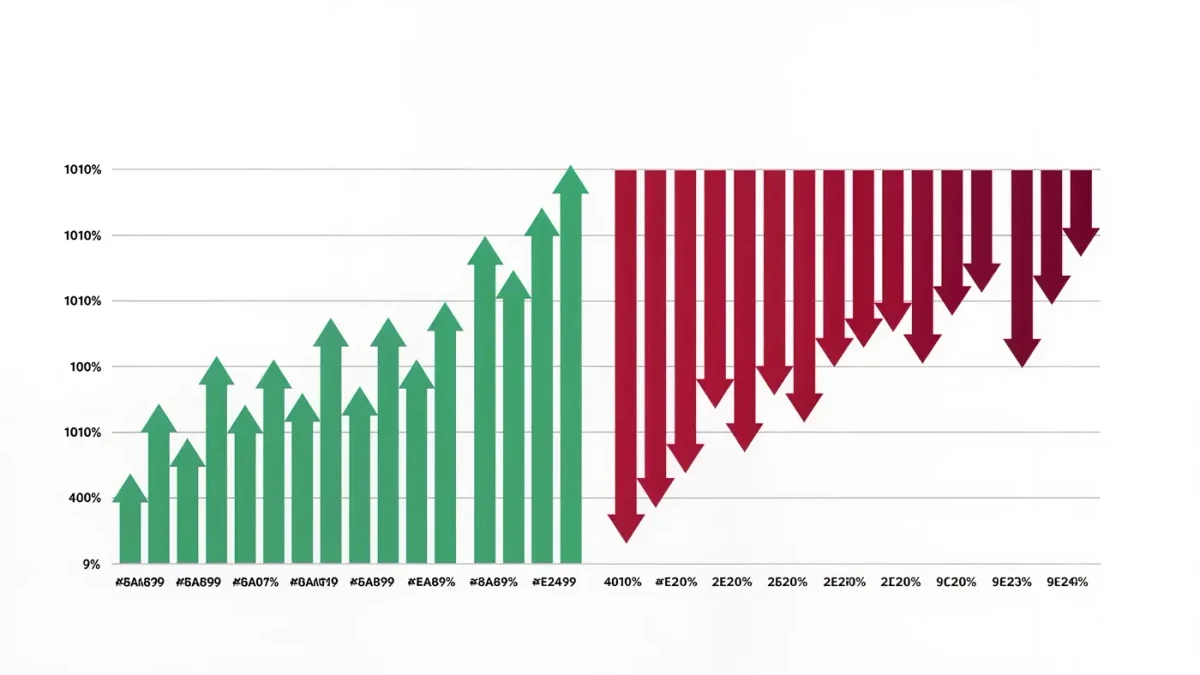
A game balance patch can flip a competitive season because professional play compounds small numerical edges — a 5 percent damage change that casual players never notice decides which characters survive at the top level. Street Fighter 6's March 17, 2026 update adjusted every character on the roster at once, per EventHubs' patch coverage, and Tekken 8 spent 2025 rebuilding its fundamental rules after raising maximum health to blunt one-sided momentum. That is the lever. Everything a competitive season becomes is downstream of it.
Academia Hagi is an independent online publication — not a game developer or league operator — and this primer explains how balance patches actually reshape professional metas, and why publishers accept the chaos they cause.
What is a meta, mechanically?
The meta — short for metagame, the set of strategies that dominate at a given moment — is what happens when optimal play meets a ruleset. Change the ruleset and the strategy tree re-sorts itself. When a patch nerfs a dominant character's key move, that character's win rate drops, the characters who lost to her come back, and the teams or players built around countering her are suddenly competing against a solved problem. One number changes; hundreds of hours of preparation depreciate.
This is why pros patch-study for a living. In the weeks after a major update, competitive teams race to find what the new rules reward before their rivals do — an information advantage measured in prize money.
Why do publishers patch at all if it disrupts the pros?
Because stagnation kills the audience faster than change does. A solved game, where one strategy or character wins everything for months, produces predictable events and declining viewership; publishers learned during esports' boom years that a periodically shaken meta generates storylines — new stars, new rivalries, new arguments — that no marketing budget can buy. Riot Games balances League of Legends on a roughly two-week patch cadence, and its 2026 season patches kept chasing jungle balance, per the official patch 26.3 notes, which targeted underperforming attack-damage junglers early in the season.
The cadence is the compromise. Patch too rarely and the meta fossilizes; patch too aggressively and competitive results become a lottery. Most competitive publishers land on seasonal anchors — a big balance drop between splits or before majors — precisely so professionals get stable rules when the stakes are highest.
What did the 2026 patch season change so far?
The early-2026 cycle was unusually aggressive even by fighting game standards. Tekken 8's Season 3 launch on February 10 came with patch 2.09 and a roadmap stretching to winter 2027, per Bandai Namco's official news page — year-three core-system tuning for a game still in its competitive prime. Street Fighter 6 went further: a March 17, 2026 update delivering a full-roster balance pass alongside new fighter Alex, per EventHubs, with Capcom confirming no demo would precede it because the balance was still in development, per GosuGamers. shooters moved in the same rhythm: VALORANT's 2026 patches reworked the competitive map pool around Lotus while adjusting Yoru, Clove, and Skye, per the official patch notes, and Overwatch added an entirely new statistic — "Protects", tracking damage mitigated near teammates, per Blizzard's patch notes — a change to how support play gets measured, not just how it plays.
What does a patch do to a professional roster?
It redistributes value between players. A specialist on a newly weakened character loses market leverage in the same window a flex player on the rise gains it — which is why patch notes get read inside team organizations the day they drop, often before the community has finished arguing about them. Coaches rebuild scrims around what changed; analysts rebuild pick-priority sheets; players who invested hundreds of hours in a now-weakened strategy start the season at a deficit nobody caused and everybody has to absorb.
Roster cycles respond with a lag. The moves fans see in a transfer window are usually responses to the patch cycle before it — an organization that watched its style get nerfed in the spring shops for players who fit the summer's ruleset. Read two seasons of patch notes alongside two transfer windows and the causality is hard to miss.
Is there a version of patching that fails?
Yes, and it has a name in the community: power creep. When every balance pass buffs rather than redistributes, the whole cast inflates, old mechanics break, and the game becomes something its systems were never designed to hold. The alternative failure is the frozen meta — a publisher so spooked by community backlash that it stops touching a dominant strategy, and competitive results calcify into reruns. Good balance work lives between those two failures, and the publishers who do it well treat the patch cadence as a promise to the competitive scene: the game you mastered will keep changing, and mastery will keep being rewarded.
How should fans read a patch like an analyst?
- Sort changes by role, not by character: a nerf to one jungler matters less than a change to jungle experience.
- Watch what was untouched — deliberate non-changes signal publisher confidence in a strategy.
- Check the timing against the calendar: a patch two weeks before a major is a statement of intent.
- Give it three weeks: metas stabilize as the second-best strategies surface.
The honest summary: patches are the closest thing esports has to a rules committee, a scheduling office, and a talent scout in one. The 2026 season's biggest storylines will not just happen on stage. They will be written in the patch notes first.