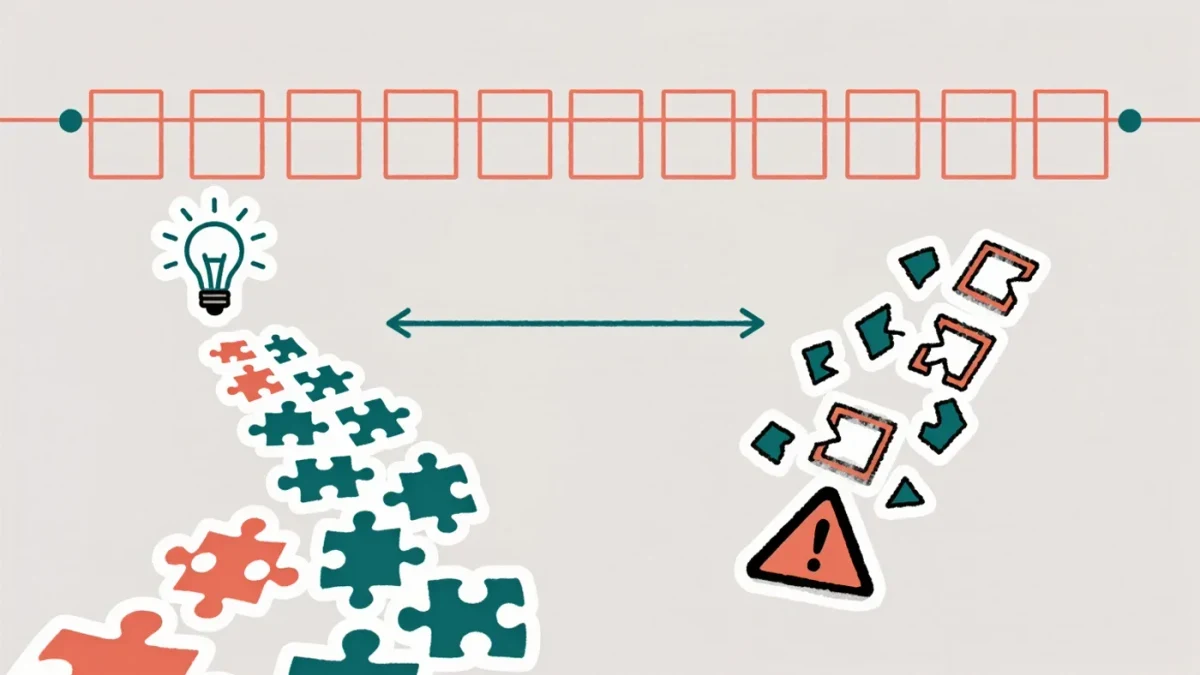
Balance patches in major esports exist because of a three-way negotiation between developers, professionals, and a loud public — and the public's seat at the table was earned, not granted. When a publisher pushes a patch, the reaction cycle starts within hours: pros test, creators post verdicts, forum threads compile win-rate data, and the next adjustment often shows fingerprints of all three. League of Legends has shipped regular balance patches since 2009, per the publisher's own patch-history archive, and that cadence — roughly every two weeks in peak seasons — is the metronome the whole culture dances to.
Academia Hagi is an independent online publication covering competitive gaming culture, not a game developer or publisher, and nothing here is balance advice for any title. We are looking at the sociology of the patch cycle, not arguing for specific buffs.
What is a balance patch, culturally speaking?
Mechanically, it is a list of numerical adjustments — damage values, cooldowns, pickup rates. Culturally, it is a weekly soap opera. Each patch redistributes power among characters or weapons, and therefore among the pros who specialize in them, the content creators whose guides age overnight, and the amateur players whose favorite picks swing between viable and useless. The patch notes themselves are a genre of literature with their own conventions, including the beloved art of the apologetic nerf explanation.
The patch also resets conversation. Community discourse organizes around a shared question — is the new state of the game good? — and every tier of the scene, from ranked ladder grinders to championship finalists, answers it publicly for roughly two weeks until the next notes arrive.
How does feedback actually reach developers?
Through channels the developers built, and channels they merely tolerate. The formal ones are public test environments — League of Legends' PBE, where changes appear for testing before live release — plus direct pro surveys, scrim-data telemetry, and organized feedback from partnered teams and leagues. The informal ones are creator videos, social platform threads, and the sheer aggregate noise of community reaction, which publishers monitor with varying degrees of official acknowledgment.
- A patch ships or hits the test environment.
- Pros test it in scrims — private practice matches — and leak opinions through streams and interviews.
- Creators publish early verdicts; forums and community spaces compile data and arguments.
- Developers adjust the patch or the next one, sometimes citing pro feedback, sometimes citing their own telemetry.
- The cycle repeats, and each side learns the other's tells.
Why do pros get outsized influence on patches?
Because their environment exposes balance problems fastest. A strategy that is annoying in ranked play is often genuinely broken at professional execution speed, where coordinated teams exploit every fraction of a percentage of advantage. Developers balance for multiple audiences at once — casual, ranked, pro — but the pro meta is the visible showcase, and a stale professional format generates the loudest criticism. Pro feedback carries evidentiary weight: when a hundred top players independently conclude a tactic is degenerate, that is data.
The influence has limits, and fans know them. Pros lobby, consciously or not, for states of the game that favor their strengths — a specialist of a newly weak character has incentives the developers must discount. Community readers have learned to parse pro complaints accordingly: whose playstyle benefits from this complaint being heard?
When has the community clearly moved a patch?
The pattern is easiest to see in reversals. Across major titles, there are repeated documented cases of changes being walked back or hotfixed within days of release after coordinated professional and community pushback — the developer ships a change, the scene's testing apparatus (scrims plus millions of ranked games) surfaces a problem the internal testing missed, and an emergency adjustment follows. Publishers rarely frame these reversals as concessions; they frame them as data review. The community reads the tea leaves anyway and claims credit, and it is not entirely wrong to.
Patch notes are the only place where a game's publisher, its pros, and its entire fan base all submit edits to the same document.
How does the patch cycle shape ordinary players?
The loop's center of gravity is the professional scene, but its weight lands on everyone. Ranked players log in after each patch to find their mains — the characters they have invested hundreds of hours in — stronger, weaker, or weirdly different, and their response is a small-scale version of the pro ecosystem: test, complain, adapt, or switch. Content aimed at casual audiences absorbs the cycle too, with tier lists, guides, and build pages rewritten on the same two-week clock, which has built an entire mini-industry of patch-day creators whose job is essentially translation.
The effect on player psychology is real and double-edged. A patch can rekindle interest — a reworked favorite feels new again, and ladders reset with fresh motivation — or it can end a relationship, the final nerf that pushes a loyal one-trick toward uninstalling. Communities understand this emotionally even when they cannot articulate the design logic, which is why patch-day threads run simultaneously euphoric and bereaved. Developers, for their part, treat this engagement as a feature: the metronome keeps the game in the conversation, and a community arguing about balance is a community still playing. The quiet weeks between patches are, from a business perspective, the dangerous ones.
What are the pathologies of the loop?
Three recur. Patch hysteria: every change declared the death of the game, every death unreversed. Meta resentiment — players who blame losses on balance rather than play, which patches can never fully fix. And influencer capture: when a handful of creators' verdicts effectively set community consensus before most players have touched the change, the feedback loop measures reaction to reaction. Developers have responded with longer testing windows, clearer philosophy documents, and occasionally shipping less per patch — all attempts to slow a discourse machine that runs hot by design.
The healthiest version of the loop is adversarial collaboration: developers who publish reasoning, pros who argue in good faith, and communities that compile evidence instead of grievances. It does happen, more often than the hysteria suggests, and when it does the game gets measurably better. The patch cycle is esports' most underrated cultural institution — a standing argument, two weeks long, reset forever, that keeps scenes alive between tournaments.